
AI agents can do thousands of useful things, but those capabilities are scattered across repositories with no shared record of what works. Gaia Skill Tree maps those capabilities, links each implementation to its maker, and ranks it by evidence.
What changed, in one line
In plain English: Gaia Skill Tree is a public map of what AI agents can do, who demonstrated each capability, and what evidence supports it.
Its second full rebuild — Yggdrasil II (v7.0.0, EPIC #1002, released 2026-07-26) — makes four structural cuts. The rule underneath all four: stop storing what you can derive.
In this post
- Four node types collapse to two
- Branch becomes a computed view
- "Ultimate" becomes a rank
- Trust Magnitude replaces the popularity gate
Cut 1 — Four node types collapse to two
Every starless node had a type drawn from {basic, extra, ultimate, unique}. Those values mixed prerequisite structure with prestige. Yggdrasil II makes the field answer one question instead:
basic— zero prerequisites. A root primitive.fusion— one or more prerequisites. Everything that is built on something else.
extra, ultimate, and unique are gone from the schema, CLI, and read-time consumers. Live result:
| Node type | Count | Share |
|---|---|---|
basic | 113 | 46.5% |
fusion | 130 | 53.5% |
| Total starless nodes | 243 | 100% |
Residue left in the retired values: zero.
Cut 2 — Branch is computed, never declared
This is the load-bearing change. Before the rule, here is the map:
| Term | What it tells you |
|---|---|
| Type | Whether a capability has prerequisites: basic or fusion |
| Branch | How a named skill progresses: suite, standard, or unique |
| Rank | How far that skill has advanced, from 1★ to 6★ |
| Trust Magnitude | How much weighted evidence supports its standing |
Yggdrasil II introduces the three-way branch view without adding a branch field. The registry computes it when the skill is read:
Two inputs, three branches, no stored copy. suiteComponents presence is checked first, then rank. The same function runs on every read, so the site and the registry can never disagree about a skill's branch.
The rule reads the two things that actually determine standing — does the skill compose other skills (suiteComponents present?), and how high has it ranked — and returns the branch:
suite— hassuiteComponents, at any rank. It is built out of other named skills.standard— nosuiteComponents, rank 1–3.unique— nosuiteComponents, rank 4 or higher. It climbed on its own.
Type and branch answer different questions
Consider obra/writing-plans: a 4★ skill with no suiteComponents, hanging off a fusion parent node. The word fusion may sound suite-like, but the two axes describe different things. type describes the generic capability's prerequisites. Branch describes how a named implementation progresses.
For obra/writing-plans, computeBranch(suiteComponents: none, rank: 4) returns unique. The resolver never consults its parent's fusion type.
Cut 3 — "Ultimate" stops being a type and becomes a rank
With ultimate gone from the type axis, it now means 5★ everywhere: Suite skills reach Ultimate; Unique skills reach Unique Ultimate. One word, one meaning, one axis.
Cut 4 — Trust Magnitude puts different evidence on one scale
Promotion used to require clearing a per-star Evidence Floor and — for a 5★ Suite skill — a hard ≥10,000 repository stars requirement. Both are retired.
Why? Repository stars measure attention on one platform. They do not tell you whether a method has been reproduced, cited, benchmarked, or independently verified.
Trust Magnitude (TM) is now the only gate on both branches:
| Grade | Trust Magnitude |
|---|---|
| S | ≥ 250 |
| A | ≥ 100 |
| B | ≥ 50 |
| C | ≥ 20 |
| ungraded | < 20 |
TM does not pretend that every kind of evidence means the same thing. It gives each one a tuned weight, then places them on a common scoring surface: a human verifier-attestation and a fusion-recipe count 1.5×, a reproducible benchmark-result 1.4×, and a self-produced repo-own row only 0.6×. An S grade additionally needs at least three distinct evidence types, including one the skill owner could not produce alone.
S is scarce by design: it requires TM ≥ 250 and at least three distinct evidence types, one of which cannot be self-produced. Only four skills clear it. No 6★ Apex or Unique Impossible has been reached yet.
Consider Google DeepMind's alphagenome_single_variant_analysis skill. Gaia's evidence record contains no GitHub-stars row for it. The repository implementation contributed 10.82 TM. The peer-reviewed AlphaGenome paper contributed 90 TM, bringing the skill to 100.82 — Grade A. Nature reported 225 citations for that paper on July 27, 2026.
| Evidence attached to the skill | TM contribution |
|---|---|
| Google DeepMind Science Skills implementation | 10.82 |
| Avsec et al., Nature — AlphaGenome | 90.00 |
| Total | 100.82 — Grade A |
A stars-only gate sees a repository counter. Trust Magnitude sees two claims: the implementation exists, and its scientific method has survived independent use and scrutiny. The registry weights each kind of evidence, applies freshness and duplication rules, then lets both contribute.
The frontend moved in lockstep: Ascension Overdrive
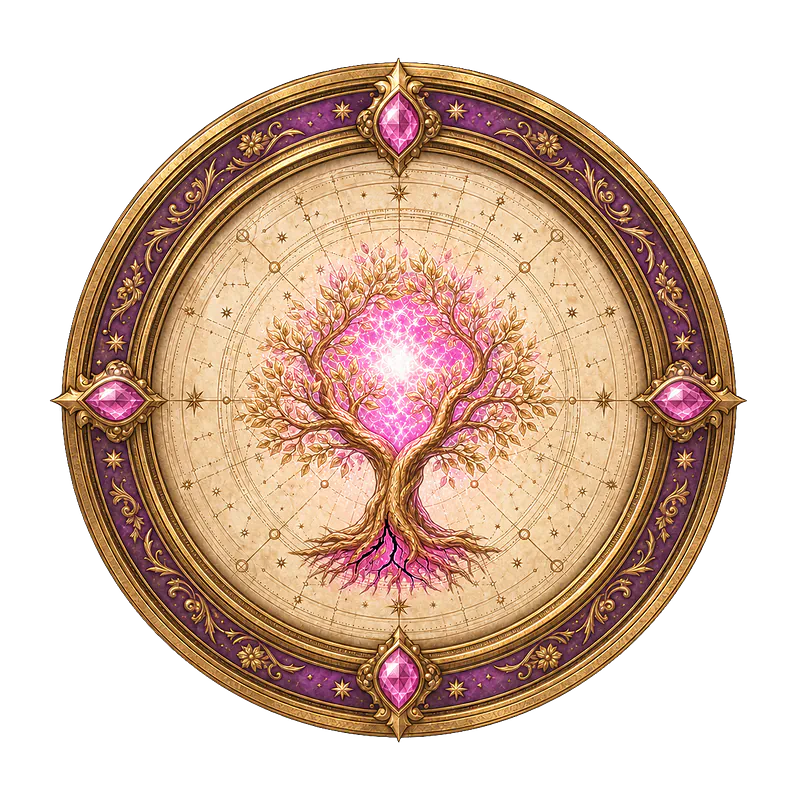
The site moved with the taxonomy under the codename Ascension Overdrive. Suite skills emit outward (4★ dwarf star → 5★ burning sun → 6★ supernova). Unique skills collapse inward (rooted void → accretion ring → singularity).
Rank sets the color. The derived branch sets the material: Suite leans gold; Unique runs amethyst to ember. The frontend reads the emitted branch instead of recomputing it client-side.
Suite


Unique
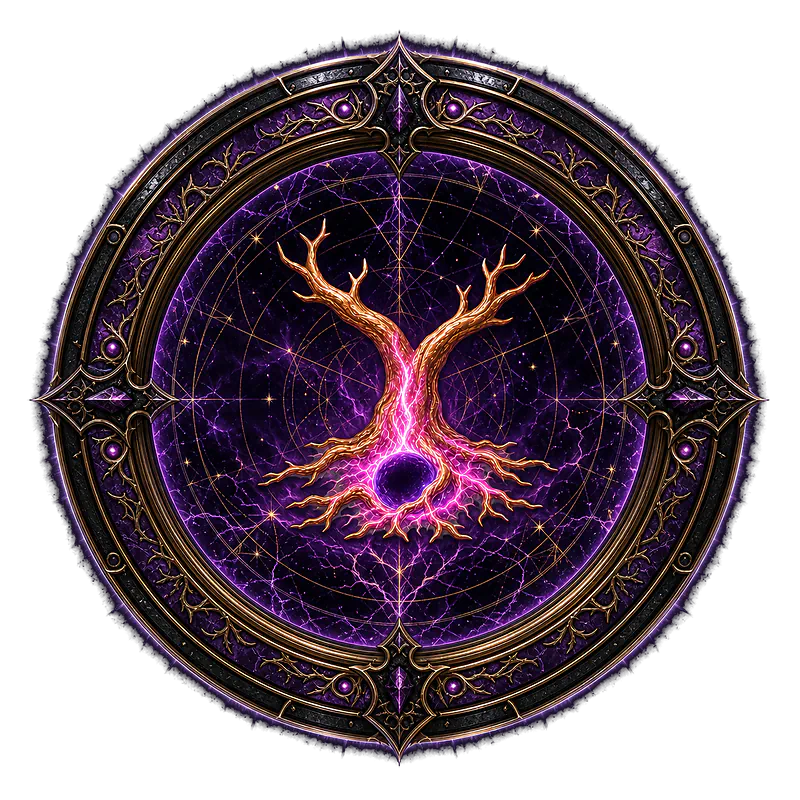
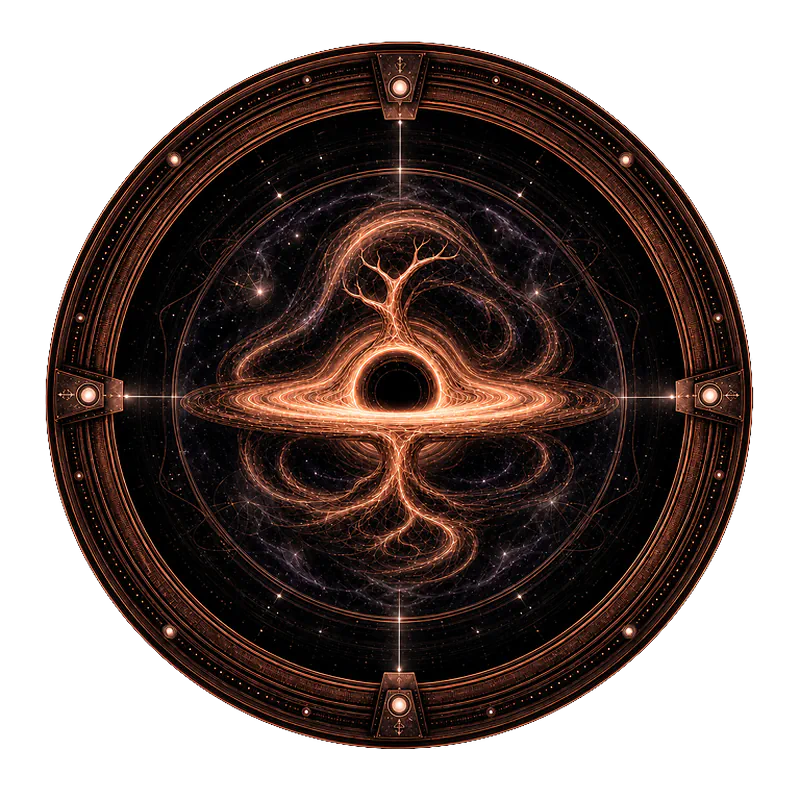

These rank motifs are owned by Gaia Skill Tree. Both branches share one antique medallion chassis: rank sets the color, while the derived branch sets the cosmology.
The two 6★ pinnacles have names now: Apex (the Suite summit — extreme ecosystem impact, guarded by a six-predicate gate) and Unique Impossible (the Unique summit — reached through depth alone, with its gate provisional pending Yggdrasil III). Four skills currently sit at S grade; none has cleared a 6★ gate yet. The Hall of Heroes is built and waiting for its first ascension.
What to take from it if you maintain a schema
If a field can be recomputed from other fields in the same record, storing it does not save you a computation — it buys you a way to be wrong. The stored copy and the computed value are two sources of truth for one fact, and the day they disagree, every consumer has to guess which one to believe.
Before adding the next column, ask whether it is data or a derivation. If it is a derivation, write the function. Then inspect your gates: if one proxy stands in for several kinds of evidence, keep the evidence types separate long enough to weight them properly.
Inspect the live tree
Open Gaia Skill Tree → to explore capabilities, implementations, and their evidence. For the full taxonomy decision record, read the Yggdrasil II release report.
Sources
- Taxonomy and release: Gaia Skill Tree
v7.0.0, Yggdrasil II (EPIC #1002), ratified July 7 and released July 26, 2026. The release report documents the type collapse, computed branch rule, Trust Magnitude gate, and rank names. - Live registry figures: node counts, current S-grade count, and AlphaGenome evidence contributions were verified against the Gaia Skill Tree graph and named-skill record.
- Peer-reviewed evidence: Žiga Avsec et al., “Advancing regulatory variant effect prediction with AlphaGenome”, Nature 649, 2026.
- Implementation: Google DeepMind Science Skills.